Matching Robot to Surface
Ensure optimal traction and cleaning without damaging your pool.
Why Pool Surfaces Matter
One of the most frequently overlooked aspects of purchasing a robotic pool cleaner is the compatibility between the robot’s mechanics and the pool's surface material. A robot designed with hard plastic wheels may excel on a rough concrete floor but will slip helplessly against a slick fiberglass wall. Conversely, aggressive abrasive brushes might be perfect for algae-covered plaster, but they can cause premature wear on a soft vinyl liner.
Understanding the interplay between your pool's surface texture and the robot's tracks and brushes is essential for maximizing cleaning efficiency and protecting your investment.
Gunite, Plaster, and Concrete Pools
These are the most durable and abrasive of all pool surfaces. They provide excellent natural traction, meaning almost any robotic cleaner will have an easy time gripping the floor and scaling the walls.
Best Setup for Concrete
Because the surface is porous, algae and bacteria can embed themselves into the micro-crevices of plaster. For concrete pools, you want highly active, stiff rubber or combination brushes. These brushes provide the necessary mechanical agitation to lift dirt out of the pores before the vacuum suctions it away. Standard rubber continuous tracks provide ample grip.
Fiberglass Pools
Fiberglass pools are prized for their ultra-smooth, non-porous gel coat finish. While this makes it incredibly difficult for algae to take root, it also presents a significant traction challenge for pool robots, especially when attempting to climb vertical walls.
Best Setup for Fiberglass
Robots operating in fiberglass pools require specialized grips. Many manufacturers offer PVA (Polyvinyl Alcohol) brushes specifically for this purpose. PVA is a highly absorbent, sponge-like material that becomes incredibly soft and sticky when wet. A robot equipped with PVA rings on its brushes or fully PVA rollers will stick to slick fiberglass like a gecko, ensuring uninterrupted wall climbing. Standard rubber brushes often slip and fail to crest the waterline in fiberglass pools.
Vinyl Liner Pools
Vinyl liners are smooth, but unlike fiberglass, they are relatively delicate. The primary concern with a vinyl pool is ensuring the robot does not puncture, tear, or prematurely wear down the printed pattern on the liner.
Best Setup for Vinyl
Soft rubber or PVC brushes are ideal for vinyl. You must absolutely avoid stiff, aggressive bristles. Additionally, it is crucial to select a robot whose tracks and chassis do not have sharp edges that could snag on a liner seam. Many entry-level and mid-range robots come standard with soft PVC brushes that are perfectly calibrated to clean vinyl safely and effectively.
Fully Tiled Pools
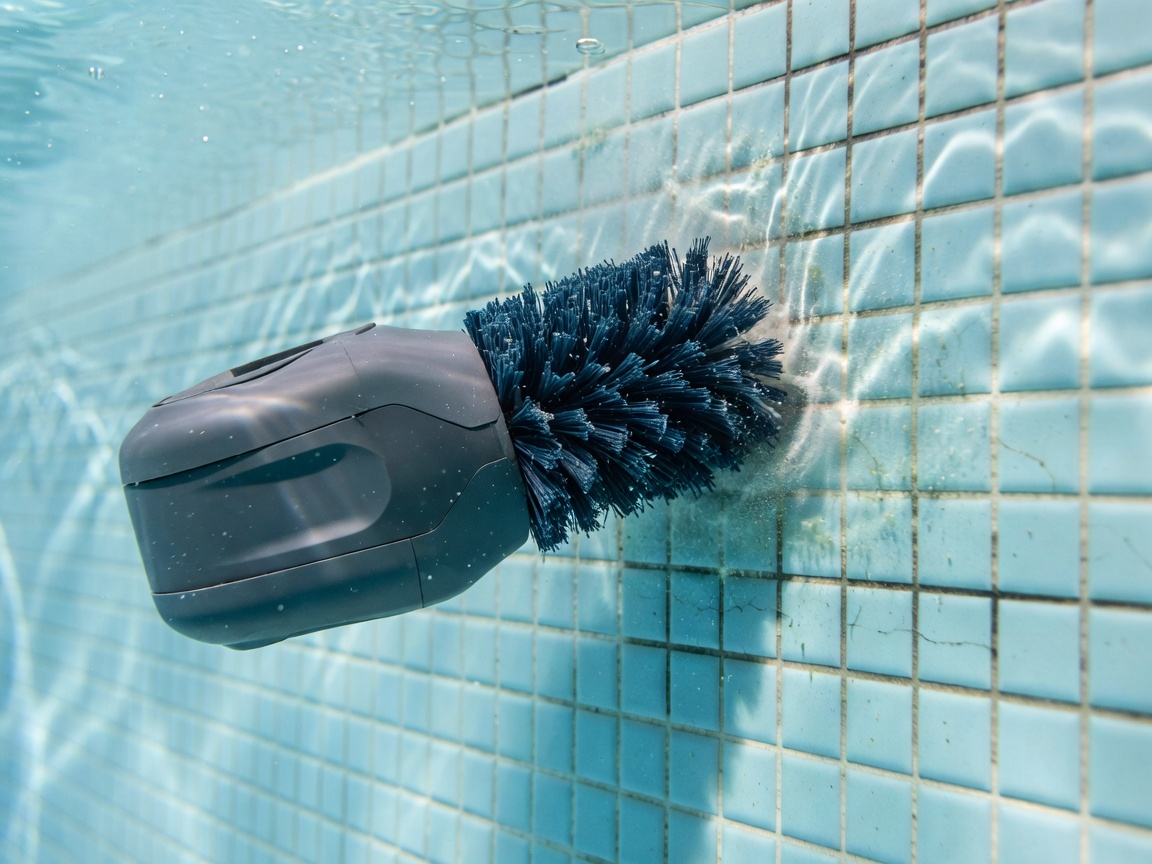
Fully tiled pools are beautiful but present a unique challenge: grout lines. Grout lines can disrupt a robot's suction seal and interfere with traction, while the glass or ceramic tiles themselves are extremely slippery.
Best Setup for Tile
Similar to fiberglass, tiled pools benefit immensely from PVA brushes. The sponge-like material conforms to the uneven surface created by grout lines, maintaining traction across the slick tiles. Additionally, a robot with a strong secondary suction motor is beneficial to compensate for any temporary loss of vacuum seal as it crosses deep grout indentations.
Summary Table: Surface to Brush Guide
| Pool Surface | Recommended Brush Type | Primary Concern |
|---|---|---|
| Concrete / Plaster | Stiff Rubber / Combination | Lifting embedded dirt from porous surfaces. |
| Fiberglass | PVA (Sponge) Rollers | Maintaining grip on slick gel coats. |
| Vinyl Liner | Soft PVC / Rubber | Protecting the liner from tears and fading. |
| Tile | PVA (Sponge) Rollers | Navigating slippery tiles and uneven grout. |
Always verify the manufacturer's specifications before purchasing. Many brands sell specific models tailored to surface types or offer aftermarket brush kits allowing you to swap from PVC to PVA if needed.