Essential Maintenance & Care
Protect your investment with routine cleaning and proper storage protocols.
Maximizing the Lifespan of Your Robot
Robotic pool cleaners operate in a harsh environment. Constantly submerged in chemically treated water, subjected to UV degradation from the sun, and routinely ingesting sharp debris, these machines endure significant wear and tear. However, with a proactive maintenance routine, a high-quality robot can reliably serve a pool for over a decade.
Daily and Weekly Routines
The most crucial aspect of maintenance is filter management. A clogged filter severely reduces the water flow through the robot. Without proper water flow, the robot loses suction, cannot filter effectively, and more importantly, loses the downward force required for traction on the pool floor and walls.
Proper Filter Cleaning
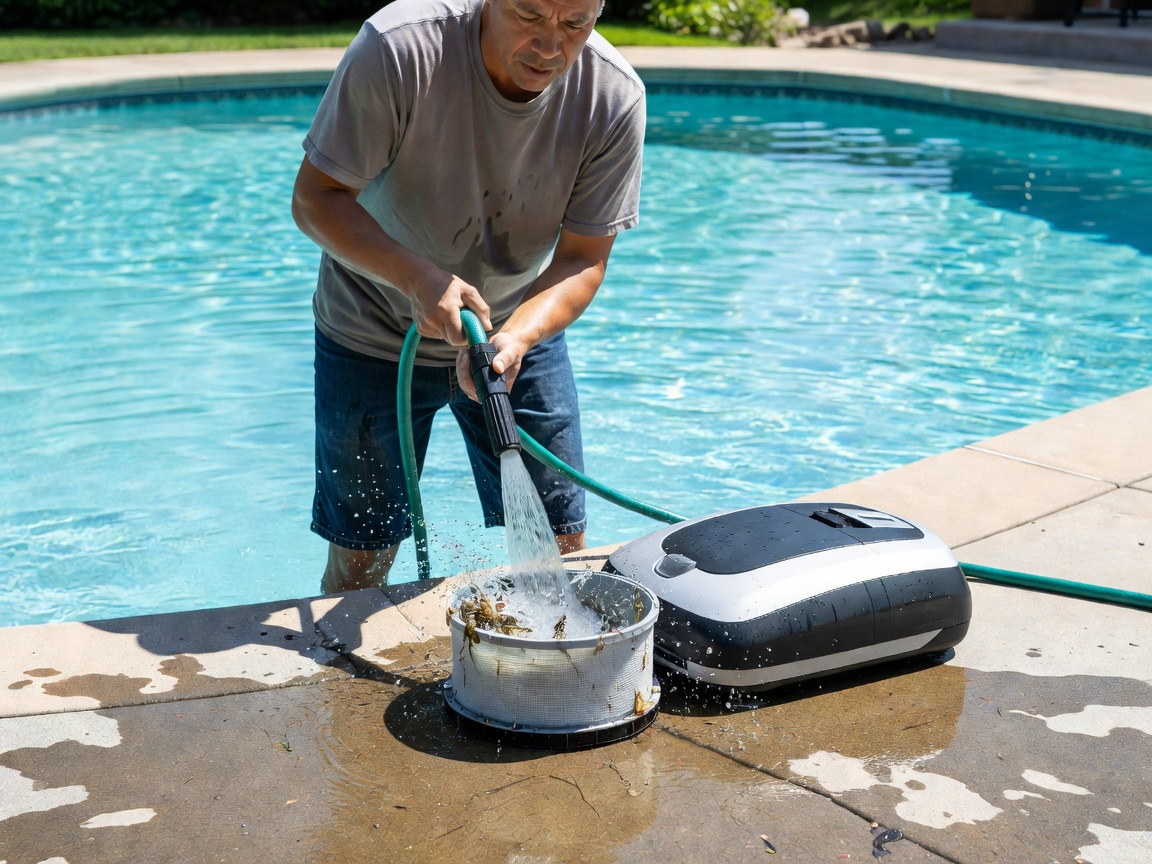
After every cleaning cycle (or every couple of cycles in a relatively clean pool), remove the filter basket or cartridges. Do not simply tap them out. Use a garden hose with a standard spray nozzle to wash the debris out from the outside in. For pleated ultra-fine filters, take care to spray between the pleats to remove embedded fine dirt and oils. Allowing dirt to dry and harden in a pleated filter will ruin it, requiring premature replacement.
Removing the Robot from the Pool
Never pull a corded robot out of the water by its floating cable. Doing so places immense stress on the waterproof seal where the cable enters the motor block, inevitably leading to water ingress and motor failure. Instead, gently pull the cable to bring the robot to the surface, grab the handle, and lift it out. Allow the water to drain from the unit for a few seconds before moving it to the deck.
Monthly Inspections
Once a month, take five minutes to perform a physical inspection of the moving parts.
- Impeller Check: The impeller is the fan blade at the top of the unit that expels water. Often, pine needles, hair, or long grass can bypass the filter and wrap around the impeller shaft. Remove the top grill (usually secured by a single screw or clips) and ensure the impeller spins freely.
- Track Tension: Inspect the rubber tracks. They should feel taut but flexible. If they are sagging loosely, they may slip off during operation. Tracks naturally stretch over time and will eventually need replacement (typically every 2-4 years).
- Brush Wear: Look at the nubs on the scrubbing brushes. If they are worn flat, the robot is no longer actively scrubbing the pool surface, just gliding over it. Replacing brushes is a cheap and easy way to restore performance.
Chemical Balance and Storage
High chlorine levels and improper pH will rapidly degrade the plastics, rubber seals, and tracks of your robot. If you are "shocking" your pool (super-chlorinating to kill algae blooms), absolutely remove the robot from the water until chlorine levels return to normal operational ranges (usually 1-3 ppm).
The Importance of a Caddy
When not in use, the robot should be stored out of direct sunlight. Prolonged UV exposure will cause the plastics to become brittle and crack. If your robot came with a caddy, use it. Storing the robot on the ground can flat-spot the rubber tracks or flatten the brushes over time. A caddy supports the unit by the chassis, keeping pressure off the moving parts.
During the winter, if you close your pool, bring the robot indoors. Freezing temperatures can cause residual water inside the motor block or sensors to expand, leading to catastrophic internal damage.