Cordless vs. Corded: Making the Choice
Which power delivery method makes the most sense for your pool?
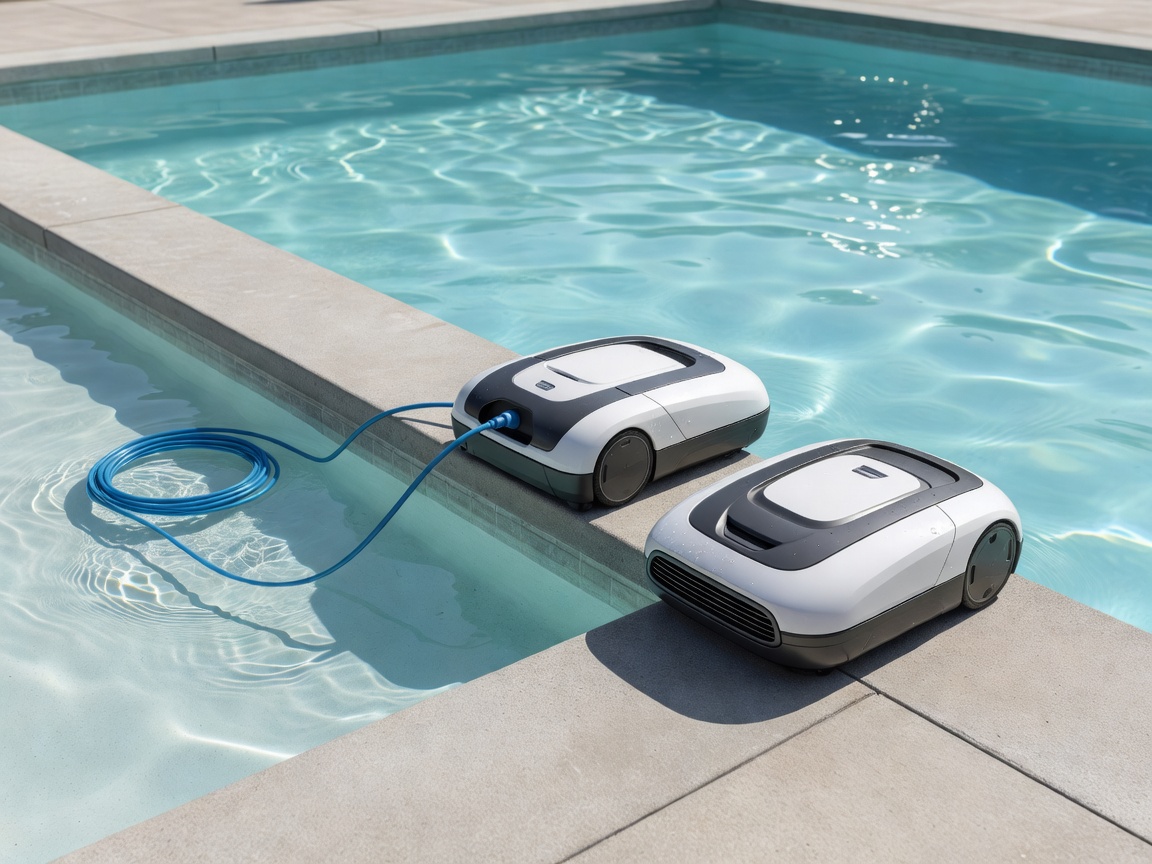
The Evolution of Power Delivery
Since the invention of the robotic pool cleaner, a floating power cable has been the standard. This cord runs from the waterproof unit in the pool to a dry power supply unit plugged into an outlet on the deck. However, recent advancements in high-capacity lithium-ion batteries have given rise to a new category: the cordless robotic pool cleaner.
Deciding between the two involves evaluating your pool's layout, your tolerance for manual charging, and your performance expectations. Let us delve into the specifics.
The Case for Corded Robotic Cleaners
Corded cleaners represent the mature, highly refined side of the market. Because they draw continuous power from the grid, they do not suffer from battery degradation or runtime anxiety. A corded robot can run a two-hour cycle, rest for a day, and run another cycle automatically on a scheduled timer without any human intervention.
Advantages of Corded
- Uninterrupted Power: Can run intensive cleaning cycles, including waterline scrubbing, without worrying about battery drain.
- Automation Friendly: Many corded units feature weekly timers or integrate with smart home systems. You can leave the unit in the pool for days at a time.
- Weight: Without a massive internal battery, corded units are sometimes lighter to pull out of the water.
The Drawbacks
The primary annoyance with corded models is the cable itself. Despite advanced anti-tangle swivels and software algorithms designed to prevent knotting, cables can still occasionally twist. Furthermore, aesthetically, leaving a bright blue cord snaking across your patio is not ideal for everyone. Finally, if you do not have a GFCI outlet within reasonable distance of the pool, running an extension cord is highly discouraged due to safety risks.
The Case for Cordless Robotic Cleaners
Cordless cleaners offer a distinct plug-and-play freedom. You charge the unit indoors or on the patio, carry it to the pool, drop it in, and let it work. There is no cord to trip over, and no limitations based on where your electrical outlets are located.
Advantages of Cordless
- Absolute Freedom: Perfect for large or uniquely shaped pools where a standard 60-foot cable might not reach all areas.
- Aesthetics and Safety: A clean pool deck with no trip hazards or electrical cables near the water.
- Easy Storage: Without a bulky cord to coil, these units are often easier to store away in a shed or garage.
The Drawbacks
The main limitation is battery life. Most cordless models offer between 90 and 150 minutes of runtime before requiring a lengthy recharge (often 4-6 hours). This means if your pool is exceptionally dirty, one charge might not be enough. Furthermore, you cannot utilize automatic scheduling; you must manually retrieve, charge, and deploy the robot for every cycle. Retrieval usually involves using a hook attached to a standard pool pole to pull the unit to the surface.
Comparing Performance
Historically, cordless models were relegated to flat-bottom above-ground pools because they lacked the power to climb walls. However, the premium tier of cordless robots today features dual-drive motors and sufficient battery output to scrub vertical walls and waterlines just as effectively as corded models. The trade-off is simply that climbing walls drains the battery significantly faster than navigating the floor.
Making Your Decision
If you value automation, have accessible power, and prefer to "set it and forget it" for the week, a corded robot with a tangle-free swivel is the superior choice. If you despise cords, have a complex pool layout without nearby power, and don't mind the ritual of retrieving and charging a device, the modern cordless robot is a fantastic, viable alternative.