Advanced Features: Waterline Scrubbing & Smart Mapping
Are premium robotic features worth the extra investment?
Moving Beyond the Basics
Entry-level robotic cleaners are excellent at one specific task: vacuuming the floor. However, as you move up the tiers into mid-range and premium models, a host of sophisticated features become available. These technological additions are designed to eliminate the remaining manual labor associated with pool ownership, specifically brushing the walls and managing cleaning schedules.
Waterline Scrubbing Capabilities
The waterline of a pool is a problematic area. This is where body oils, sunscreen, pollen, and airborne dust accumulate, creating a stubborn scum ring. If left unchecked, this ring can harden and become exceptionally difficult to remove without aggressive manual scrubbing and specialized chemicals.
Premium robotic pool cleaners solve this by featuring dual-drive motors and advanced buoyancy control. When the robot approaches a wall, it tilts upward and drives itself vertically. Once it reaches the surface, instead of immediately falling backward, it uses lateral propulsion to inch its way horizontally along the waterline. Its high-speed brushes aggressively scrub the tile or liner right where the air meets the water.
For pool owners who hate manually brushing their pool, waterline scrubbing is arguably the single most valuable premium feature available.
Smart Navigation and Mapping
Older robots relied on "bump-and-turn" mechanics. They would drive in a straight line until they hit a wall, randomly adjust their angle, and drive again. In a perfectly rectangular pool, this works fine over a long enough timeframe. In freeform pools with complex curves, tanning ledges, and deep ends, random navigation often leaves distinct patches untouched.
The Role of Sensors
Modern premium robots utilize a suite of sensors, including gyroscopes and tilt sensors, paired with algorithmic software. During the first few minutes of a cycle, the robot scans its environment, effectively "learning" the shape and dimensions of the pool. It then calculates the most efficient route, employing a structured grid pattern.
This intelligent mapping reduces the overall cleaning time, saves wear and tear on the machine's motors, and ensures 99% coverage of the pool's surface area. Some systems even prioritize areas, recognizing deep ends where debris tends to settle naturally.
App Connectivity and Remote Control
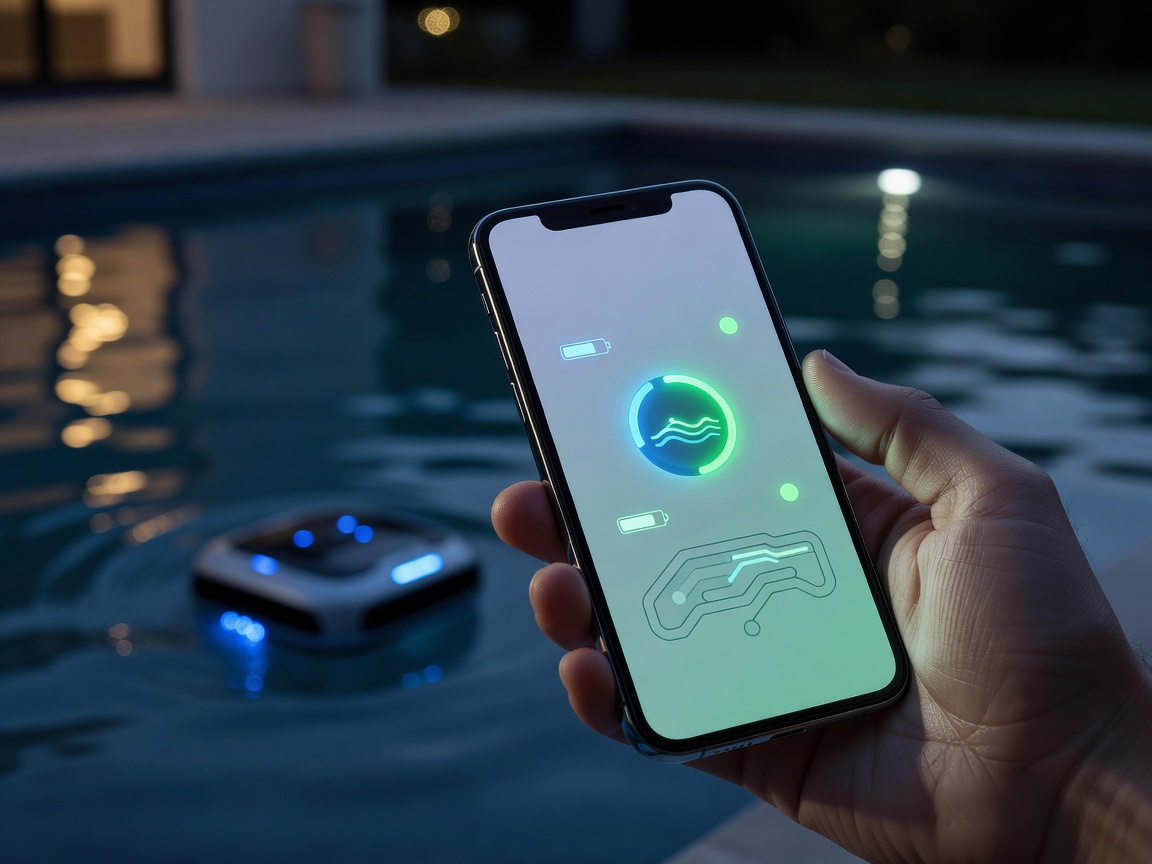
The integration of Wi-Fi and Bluetooth into power supplies has transformed how users interact with their pool hardware.
- Custom Scheduling: App-connected robots allow you to set specific cleaning schedules. You can program the robot to clean every Tuesday and Friday at 2 AM, ensuring a clean pool by morning.
- Targeted Cleaning: Many apps feature a manual override mode. Using your smartphone as a digital joystick, you can drive the robot directly to a specific pile of leaves that blew in, rather than waiting for a full cycle to complete.
- Cycle Selection: Don't have time for a full 2.5-hour clean? Premium models often allow you to select a "Quick Clean" mode via the app, prioritizing just the floor in 60 minutes before a pool party.
Conclusion
While basic models provide immense value by vacuuming the floor, advanced features transform a pool robot from a simple vacuum into an autonomous pool caretaker. Features like waterline scrubbing and smart mapping drastically reduce manual maintenance, making the premium price point justifiable for many pool owners.